0013 POLICARPA IN THE YEAR 3000
Ok, the play takes place in 2035. But the year 3000 was on on my mind and it kinda sounds cooler.
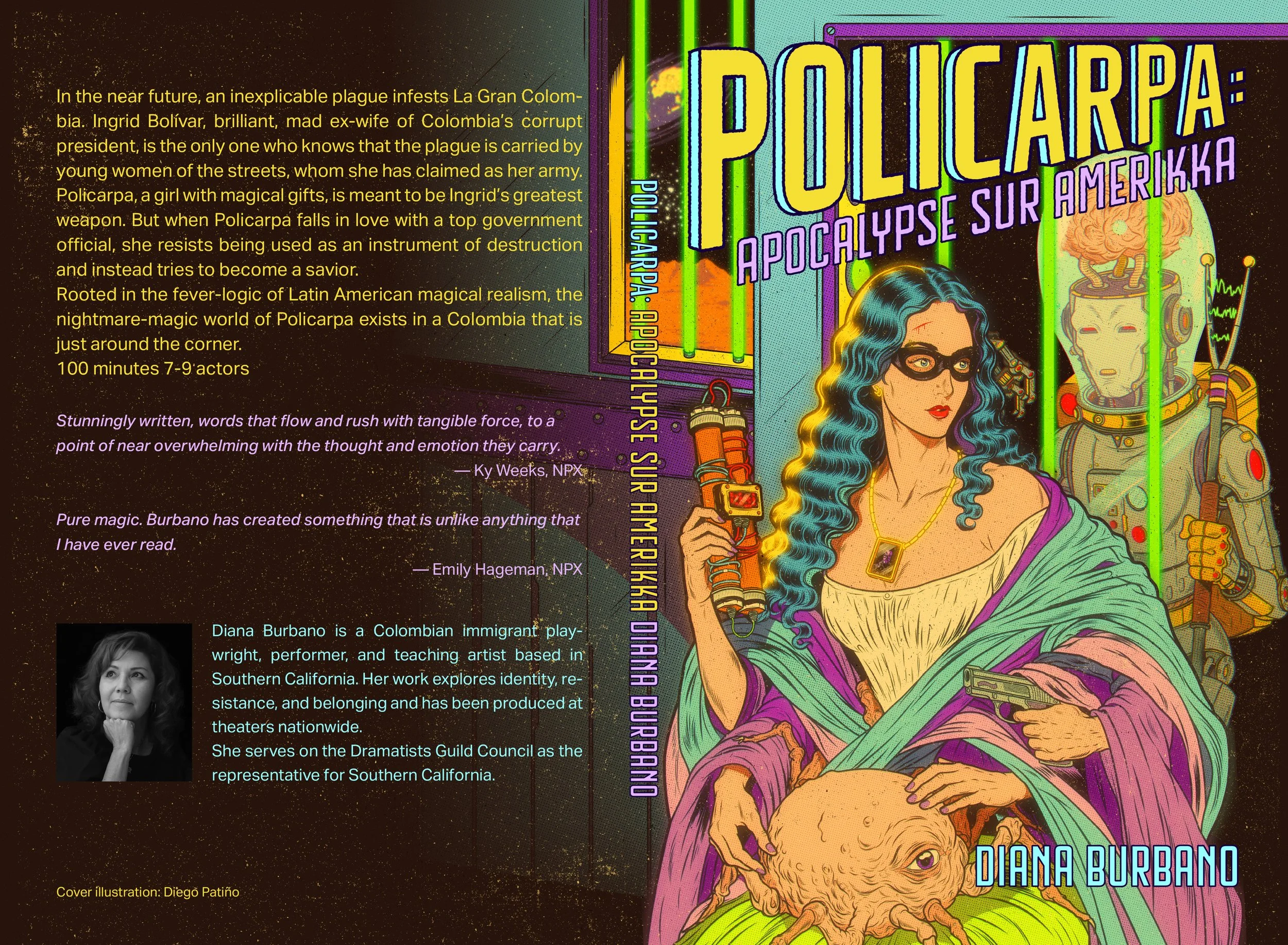
About ten years ago, a playwright called Diana Burbano reached out asking if she could use the portrait I had done of Policarpa Salavarrieta for the 2010 Colombian exhibition Bicentenario Pop as the cover of a play she was writing.
At the time, in full distrustful mode, I asked for what was an impossible amount of money. This was a strategy I would sometimes use simply when I didn’t feel like making things easy for someone requesting the use of one of my pieces. You see, the problem is that every now and then someone will try to take advantage of you, asking for work for free or offering very little money, so I guess this was my way of dealing with that.
Cut to a decade later. I’m finding myself in a bit of an existential crossroads regarding my work and my life in general when I receive a surprising email from Diana asking, again, if we can come up with some sort of arrangement as she would finally be able to publish her play as a book. Now, however, I’m more than willing to say yes, mostly because I can truly appreciate having been kept in someone’s mind all along. But when I go back and take a look at that 2010 illustration, I find it precarious. And that’s not just me passing judgment on my younger self. Or maybe it’s exactly that. But who doesn’t truly despise bits and pieces of their past selves?
Embarrassed by the realization that the first version hadn’t aged particularly well, I proposed something different to Diana: for the same amount of money she would pay me for the reprint rights the old illustration, I’d make a new version for her book. Worst-case scenario, I tell her, she’d hate it and simply use the old one.
So I used my own self-imposed proposition as an opportunity to revisit the original and work on something new.
A few notes on the 2010 version first:
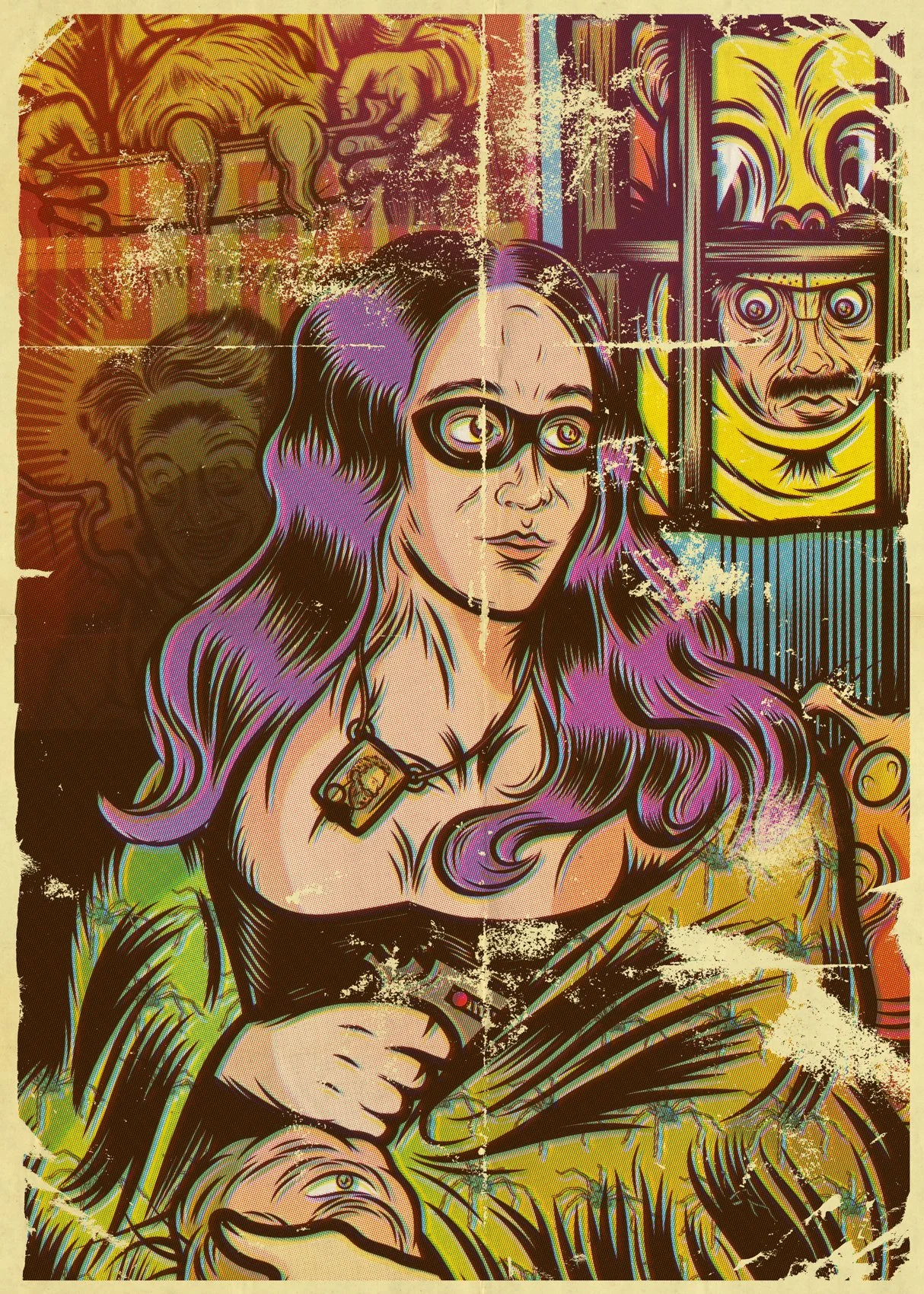
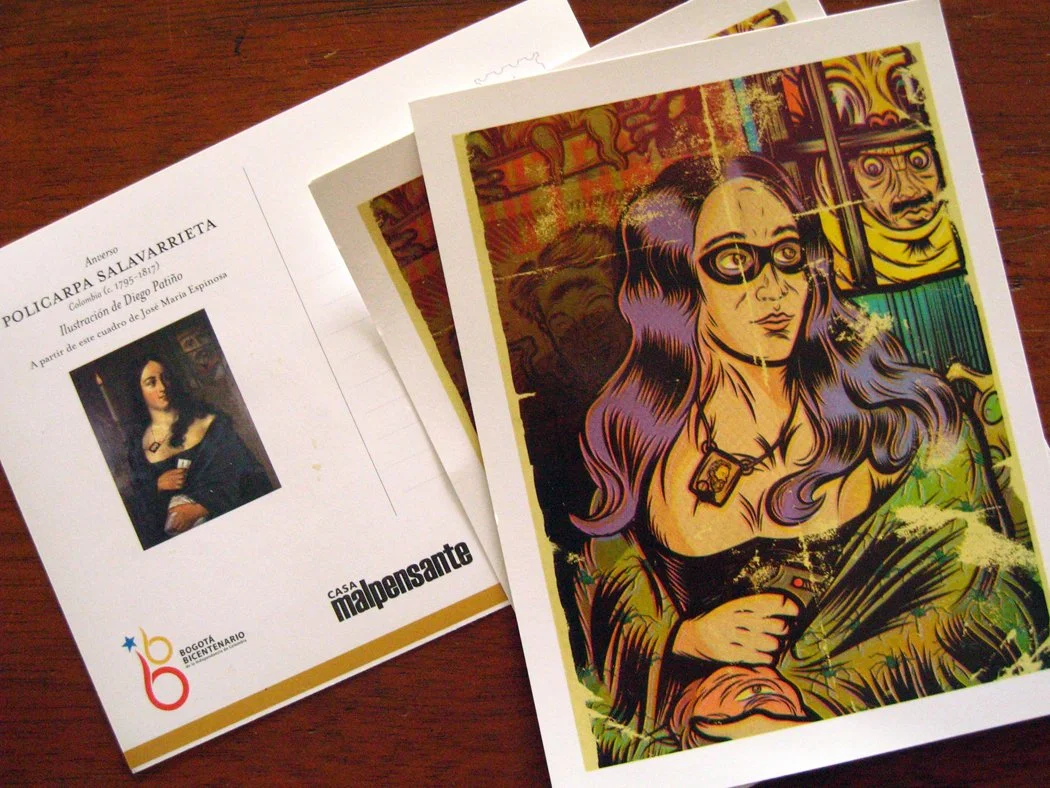
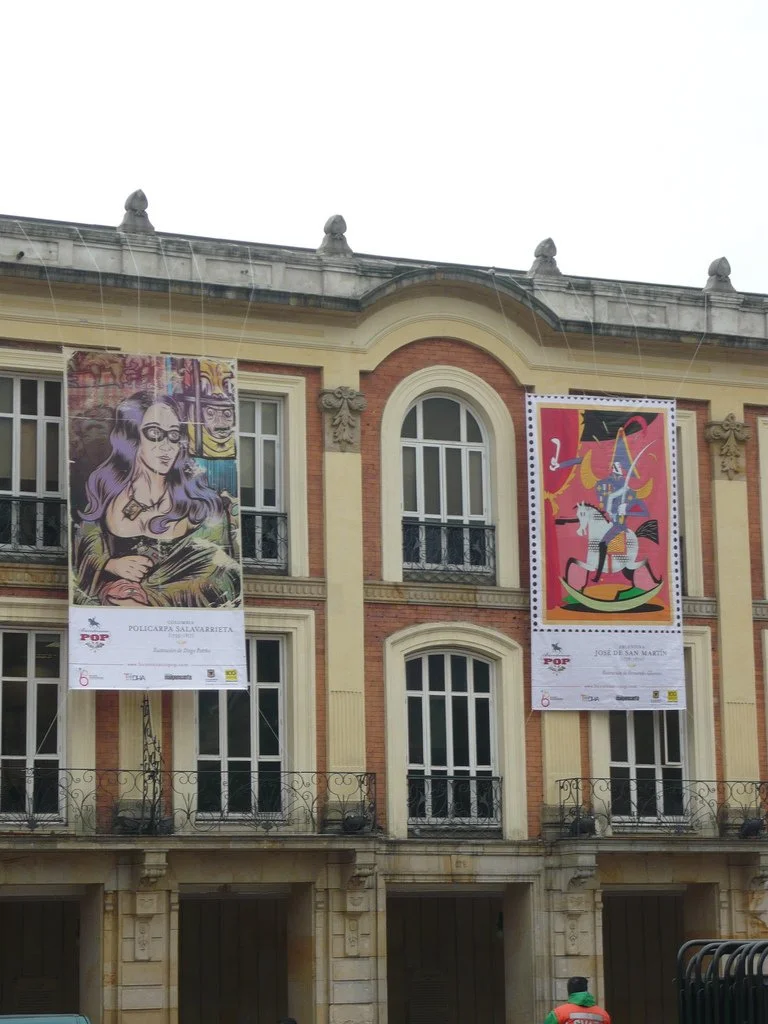
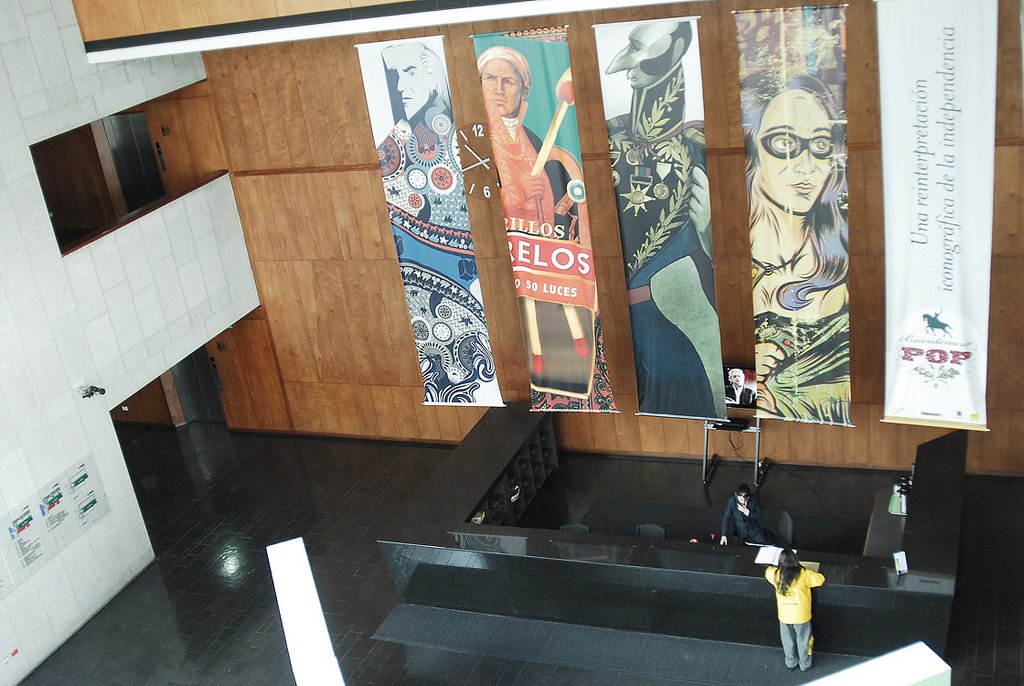
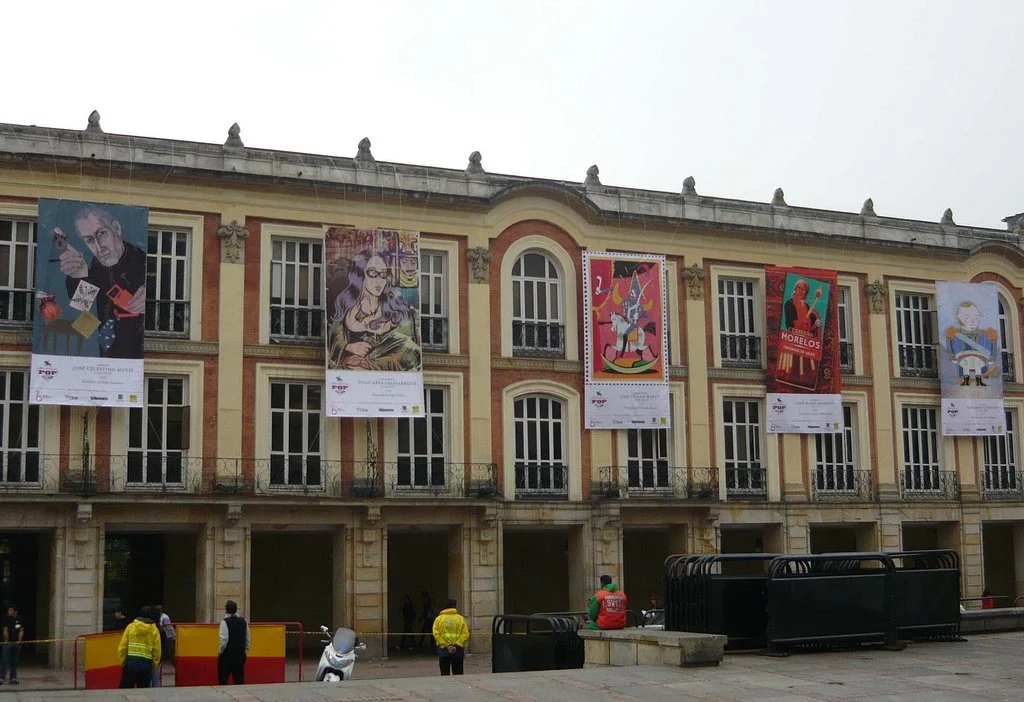
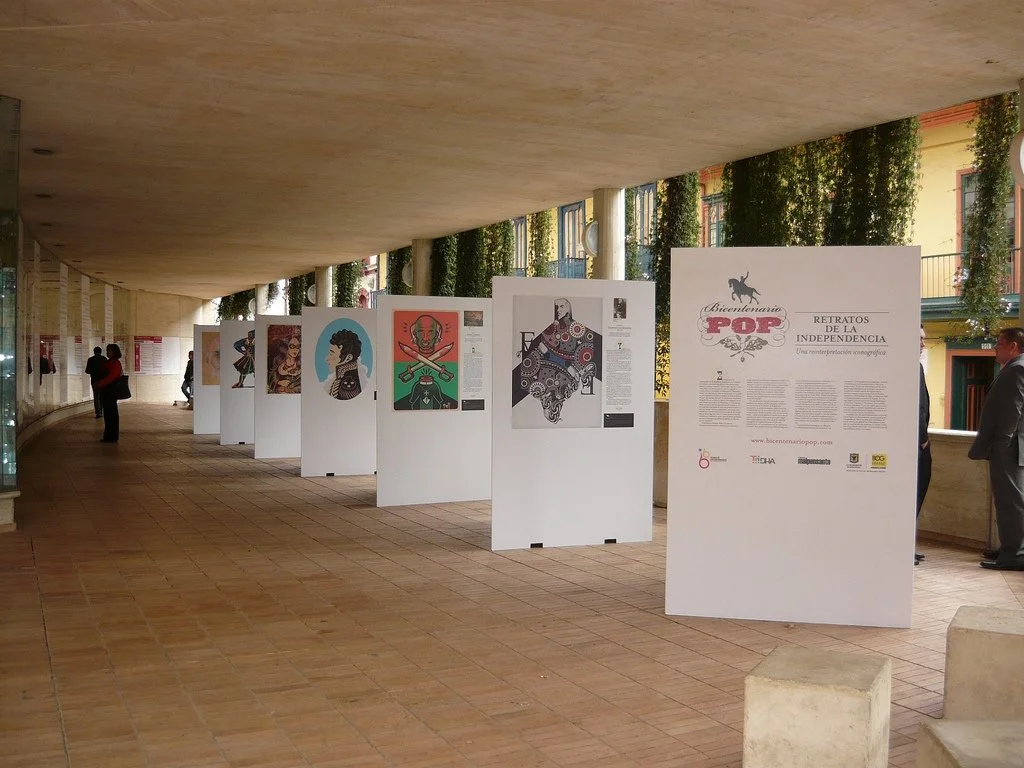
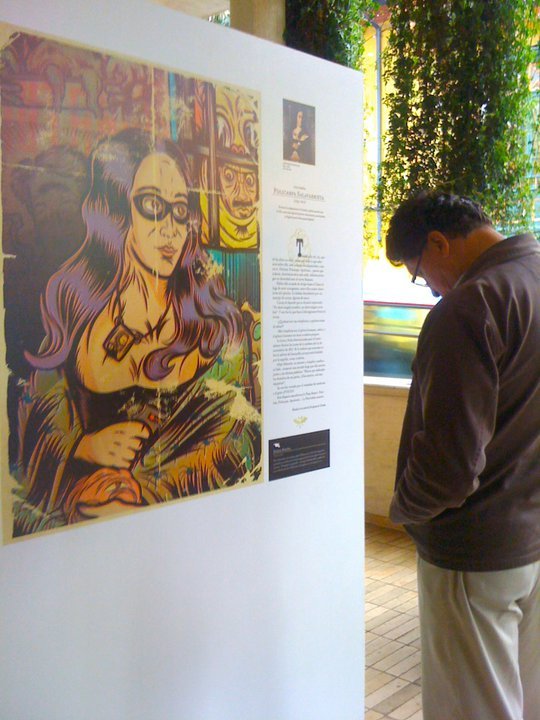
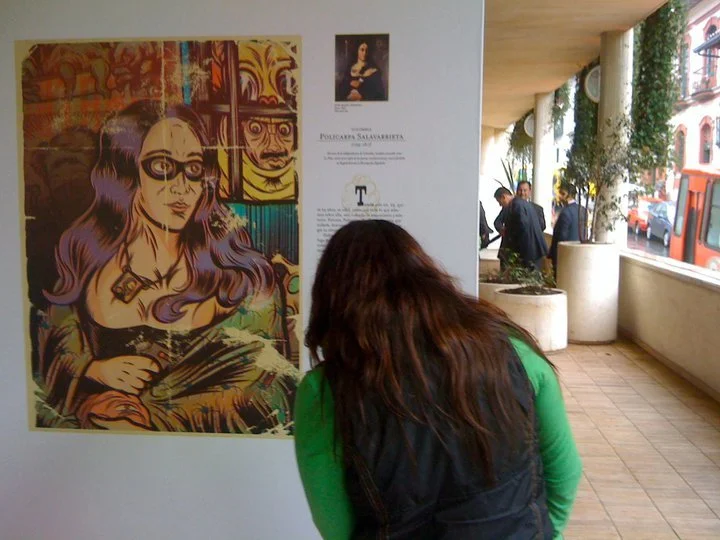
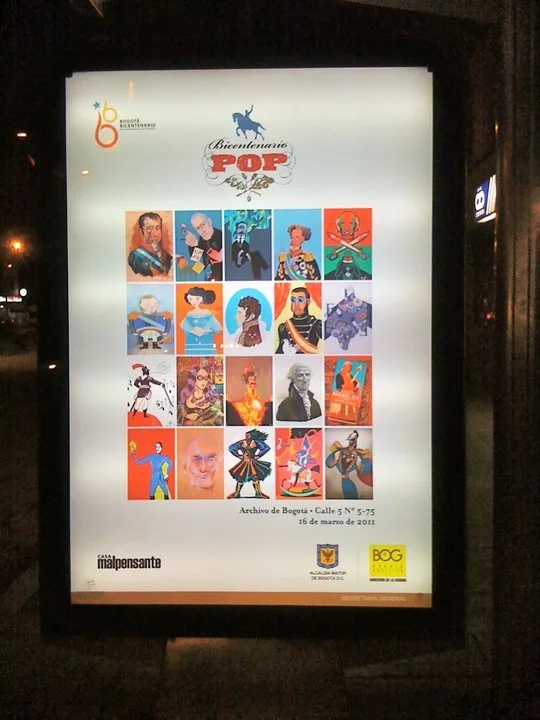
As mentioned above, I created my first Policarpa for Bicentenario Pop, an exhibition organized in Bogotá in 2010 by El Malpensante. The idea was to have 25 artists reimagine portraits of important characters from the Latin American independence movements of the 19th century and reinterpret them however we pleased. And so, I was assigned Policarpa Salavarrieta, a young political martyr who was executed by the Spanish army at the age of 22, in 1817. My version had to be based on José María Espinosa’s original portrait from 1857.
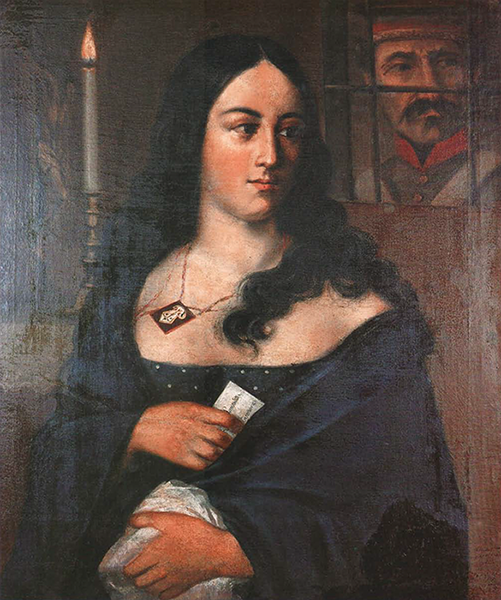
The OG La Pola en capilla (1857) by José María Espinosa depicts Colombian independence heroine Policarpa Salavarrieta (known as La Pola) imprisoned in a chapel as she awaits her execution.
I remember my first proposal being rejected because I had portrayed her as a mutant with a spider’s body. I thought it was the best idea ever (unfortunately unavailable these days) but the person who assigned me the piece asked me to apply myself and produce a new version. Their loss.
There’s also a bizarre element that emerged as the years passed. If you pay attention to the details of my 2010 version, you’ll discover that the illustration was really about my mom being held captive by my father—a comment, no doubt, on their unhappy marriage. Policarpa is also wearing a cameo around her neck, which contains an unashamed self-portrait. Shame on me.
The guard figure, dressed in the original 1857 portrait in traditional military garments, was replaced with a man inside a bear suit which I guess it symbolized my dad’s incapacity to grow old.
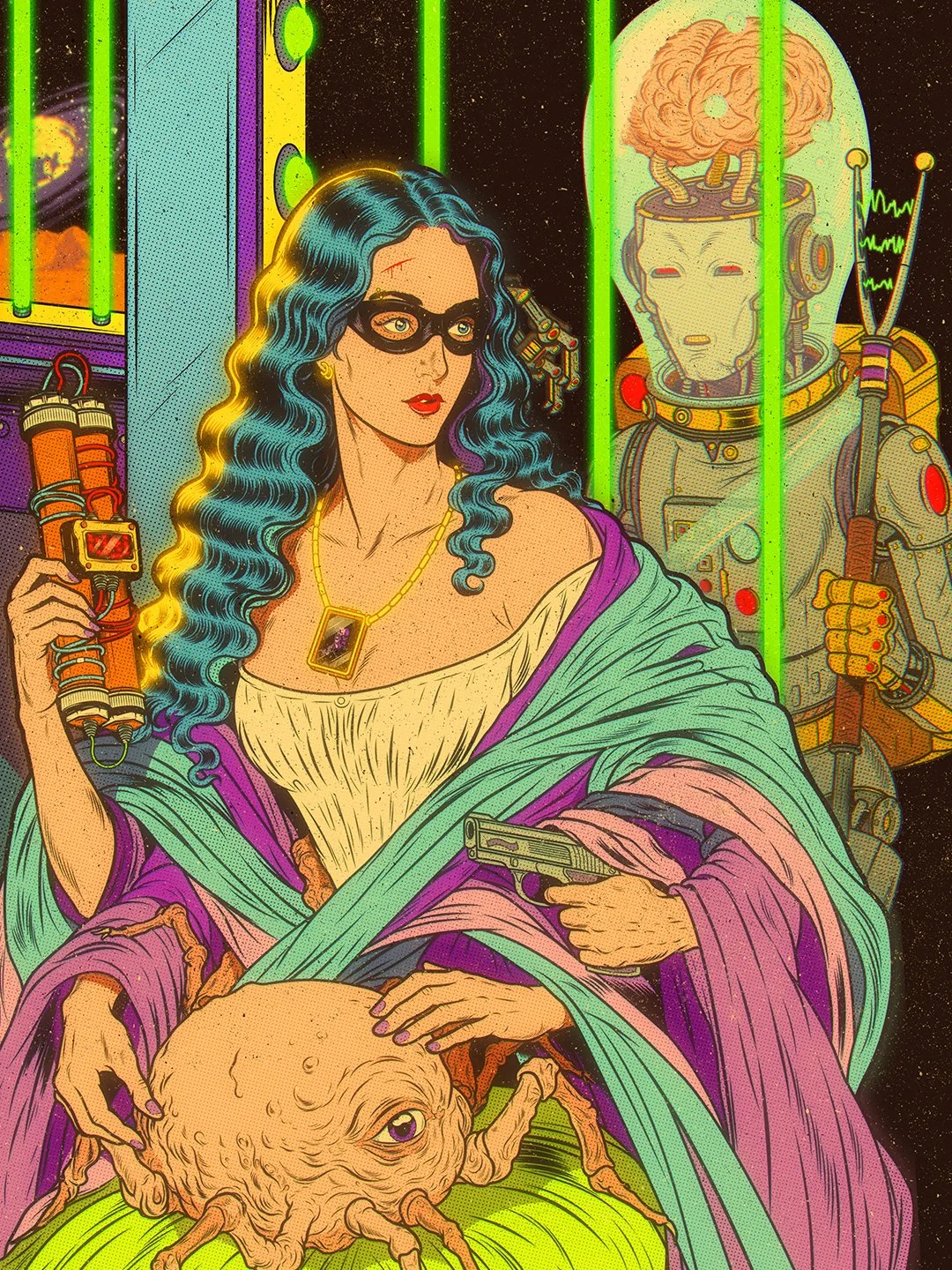
In my version, Policarpa is also holding a gun and a creature on her lap. What did I mean by that? I have no idea. But both elements, for sure, couldn’t be missing in the new version. Plus a set of explosives.
The 2026 version also gave Policarpa a new set of extra arms inspired by an old comic book I found in my childhood room: the Spanish edition of Superman’s Pal, Jimmy Olsen #49, The Human Octopus. I mean, why not, right?
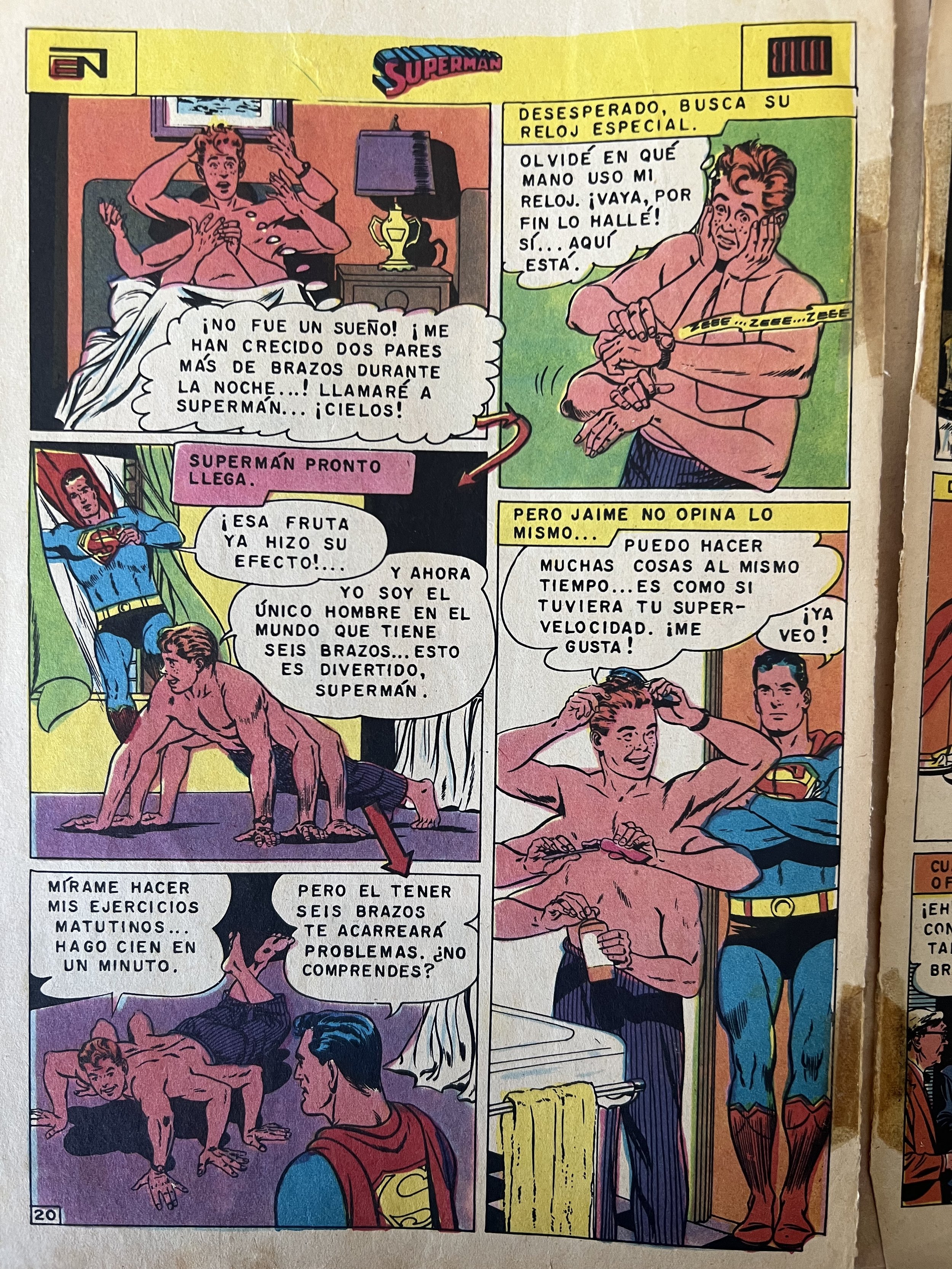
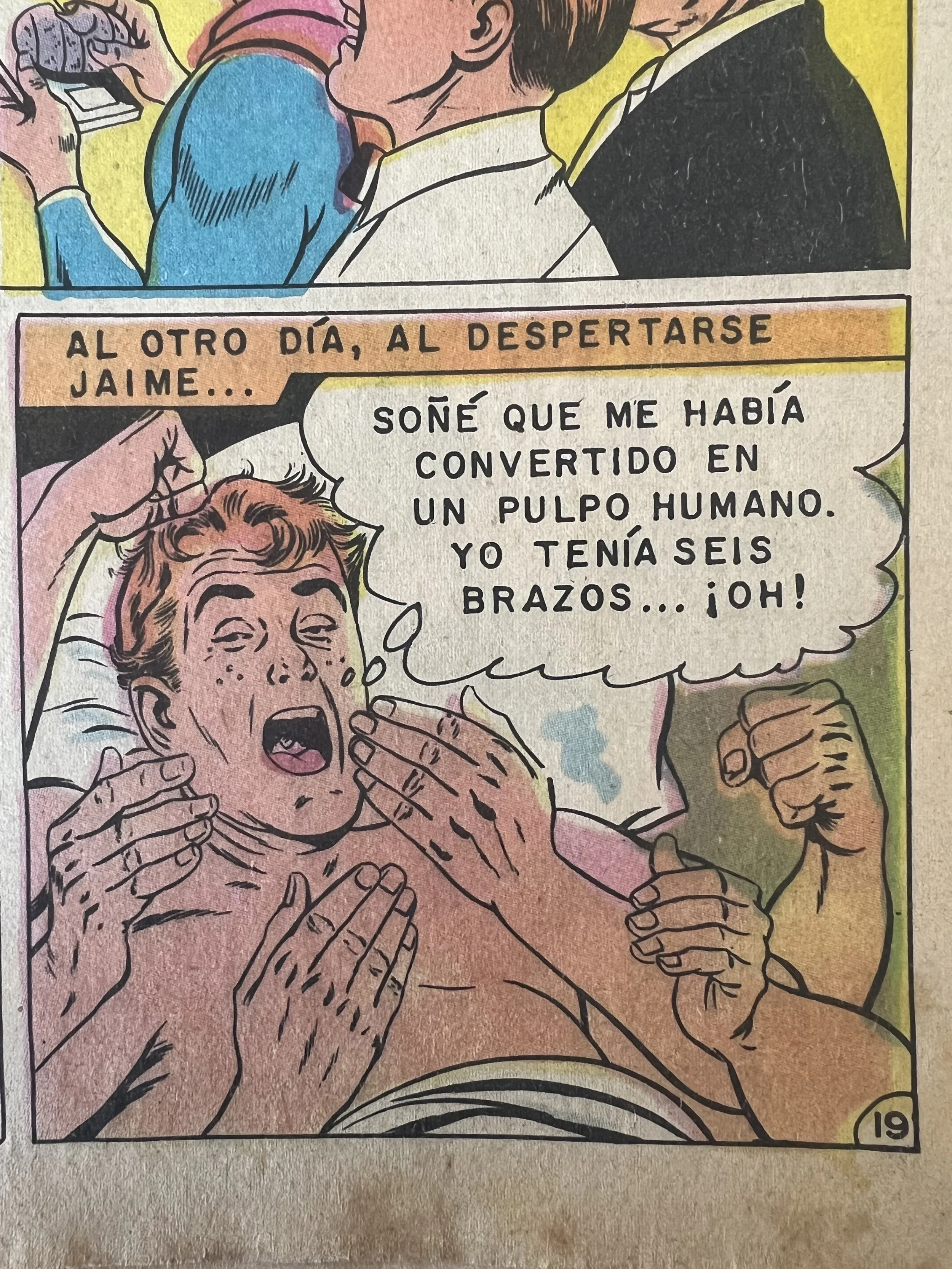
The new version is also leaner and more aligned with the kind of aesthetic I’m pursuing lately. Sure, it’s still closely related to classic Americana-style comics, but it’s more refined.
The man-child in the bear suit from 2010 was replaced as well. Maybe because my dad had passed since that illustration saw the light of the day and any the shortcomings he had and anything else I needed to work out around him had already been sorted out. So a robot with an exposed brain seemed more appropriate in 2026. Maybe, in hindsight, I’ll discover that I was attempting a comment on AI or something, but that’s a bit cheap if we’re being honest. And more importantly, Policarpa in 2026 is no longer my mother.
I’m sure Diana’s play has little to nothing to do with my illustration, but I have to thank her immensely for giving me a vote of confidence in producing this piece, especially at a time in my life that has been far from easy but where I would find opportunities like this to reconnect with a part of my work that I truly love.