
0004 — GRUMBOFREEZOID.
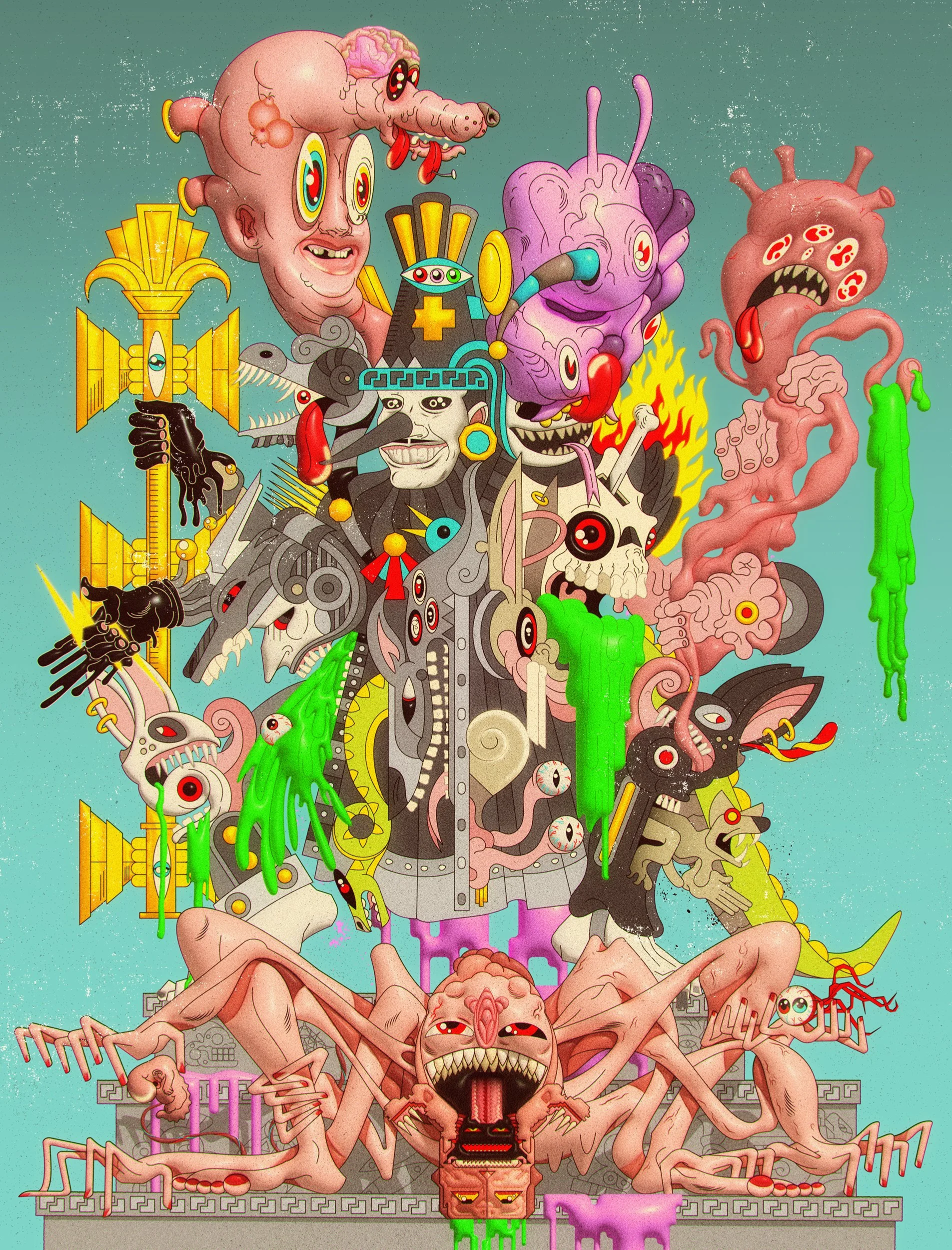
“Keep the wrong. Keep the double. Keep the joke that turns to trouble,” the mother kept repeating to herself, a verbal tourniquet meant to contain something terrible from happening, even though it was probably too late.
It was early in the morning, and she was waiting outside the house, coat half-buttoned, keys clenched in her fist like a rosary. She couldn’t spend another minute alone with him inside—not like this—so she waited until her sister arrived. Until everything could be corroborated, or burned to the ground, or worse.
“Keep the wrong. Keep the double. Keep the joke that turns to trouble,” she said again, and then finally added, “one reality that’s quietly coming apart.”
When the aunt arrived a few minutes later, she embraced her sister to console her. “It’s not your fault,” she said. “We’ll fix this.” She raised the paper bag she was carrying so her sister could see it. Then they rang the bell together. “We can’t just walk in. He must invite us now,” the sister said.
It didn’t take long before he opened the door. His face was wrong, the aunt noticed. Not grotesque exactly—worse. Almost correct but… miscalibrated. Misunderstood. As if his head had been enlarged by a careless photocopier, skewed a few degrees clockwise.
His limbs were wrong too. Lifeless. Hanging from his torso like rubber props forgotten after a rehearsal of a puppet show gone awry.
His smile arrived right after the rest of his expression, stretched thin, delayed.
“What is this I smell?” he asked.
“Cake,” the aunt replied, revealing the contents of a thin cardboard box inside the paper bag. “Should we have it inside?”
He nodded, as if filing the information away for later use. His face wasn’t his. It was smiling, yes—but like a distortion, like a joke told through a broken speaker.
Three hours earlier, the son had returned home unexpectedly, knocking on his mother’s door just before dawn, after years of silence. He had lived in a big city, as far as she knew. They hadn’t spoken in a long time. Her initial surprise had been almost joyful. But that feeling lasted less than the pop of a soap bubble, replaced by something uncanny—the sense that someone had learned how to imitate her son without understanding who he really was.
Yes, she had called his name last night. She had gone to his old room and set everything up as her sister told her to. Then she said the words:
Keep the wrong.
Keep the double.
Keep the joke that turns to trouble.
Watch him smile, arrive home soon.
Count the steps.
They don’t lag.
Gilded by the moon.
Were those even the right words? Something went wrong. Something else came home instead. Not him. Not her son.
Once inside the house, both women watched as he devoured the cake, squealing and grunting. Then he smiled again without looking at them, satisfied and drowning in his own gluttony. Mother and aunt gathered instinctively, forming a loose semicircle around him, studying him the way people study an animal they suspect might suddenly stand upright—the only family left he was not; that became clear.
“How much I wish this misalignment hadn’t occurred. You can never be sure who or what will show at the door,” the aunt said to her sister. And with that, the sweet mirage of what might have been—of something that would have reminded the mother of life before her son was forever lost to the entrails of the city—went up in smoke, pulling the women back into their present reality.
In that gap, both the aunt and the mother held hands and repeated in unison:
Name the smell.
Show the proof.
Box. Cake. Witness. Solid roof.
If it fits but feels untrue,
If it blinks a beat askew—
Step aside.
As of now, please flee.
First one teaches what to see.
Expel the wrong.
Expel the double.
End the joke that turns to trouble.
And with that, the usurper caught fire.
The flames were bright, yet produced no heat, burning nothing but him. The women stared, and continued to stare long after there was nothing left but a carcass dusted in ash.